Building a Healthier Zambia: Why Health Taxes Matter to Everyone
· By Staff Writer, Master Chimbala Foundation (MCF)
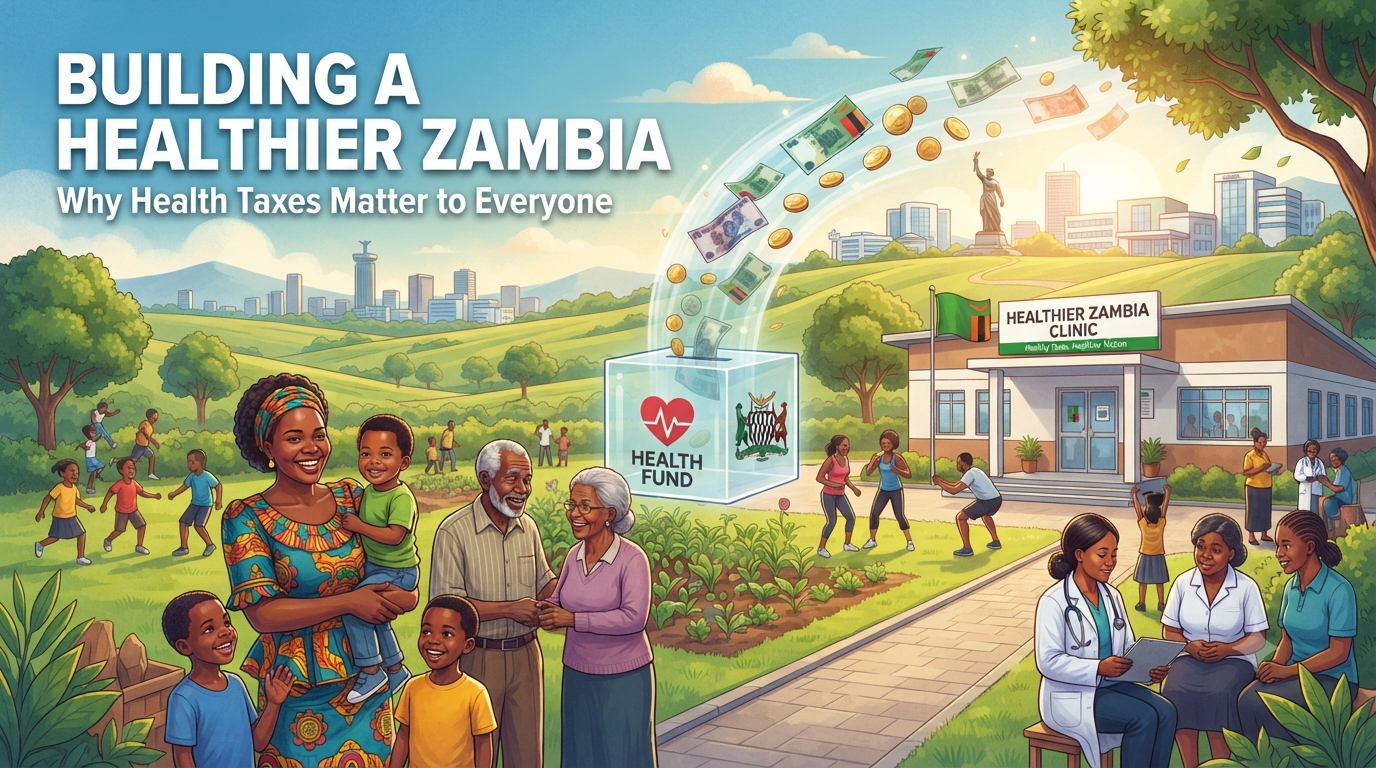
When people hear the term health taxes, many assume it is an issue that only affects smokers, alcohol consumers, or people who regularly buy sugary drinks. However, the reality is very different. Health taxes affect all of us because the health consequences of harmful products affect all of us.
Whether we use these products or not, we all share the cost of the diseases they cause. We pay through overcrowded hospitals, rising healthcare costs, reduced productivity, family hardship, and lost opportunities for national development. This is why health taxes are not simply a taxation issue. They are a public health and development issue.
Across Zambia, non-communicable diseases (NCDs) such as cancer, diabetes, heart disease, stroke, and chronic respiratory illnesses are becoming increasingly common. Many of these illnesses are linked to tobacco use, harmful alcohol consumption, unhealthy diets, and excessive consumption of sugary drinks. While these diseases often develop slowly, their impact can be devastating.
For many families, a diagnosis of cancer, diabetes, or heart disease brings more than physical suffering. It often comes with high treatment costs, repeated hospital visits, lost income, and emotional distress. Parents may struggle to pay school fees. Businesses may lose productive workers. Communities may lose active citizens and leaders. In severe cases, illness can push entire households into poverty.
This is why prevention matters.
Health taxes are taxes placed on products that are known to increase the risk of disease, particularly tobacco products, alcoholic beverages, and sugar-sweetened drinks. The purpose is not to punish consumers or take away personal freedoms. Rather, the goal is to reduce harmful consumption, prevent disease, and protect public health.
Around the world, health taxes have proven to be one of the most effective public health interventions available. Research consistently shows that when the price of harmful products increases, consumption decreases. This effect is particularly strong among young people, who are more sensitive to price changes and are less likely to begin harmful habits when products become less affordable.
The benefits extend far beyond individual consumers.
When fewer people smoke, fewer families experience tobacco-related cancers and heart disease. When harmful alcohol consumption decreases, communities experience fewer injuries, road traffic crashes, incidents of violence, and alcohol-related illnesses. When sugary drink consumption falls, the risks of obesity and diabetes can be reduced, especially among young people.
The entire health system also benefits. Fewer preventable illnesses mean fewer hospital admissions, reduced pressure on healthcare workers, and lower healthcare expenditures. Resources that would have been spent treating preventable diseases can be redirected toward improving healthcare services, expanding access to medicines, and strengthening health facilities.
Health taxes also make economic sense.
A healthier population is more productive. Healthy workers are able to contribute more effectively to the economy, businesses experience fewer productivity losses, and families retain more of their income instead of spending it on avoidable medical expenses. Reduced disease means increased productivity, stronger communities, and greater economic growth.
For a country like Zambia, which is striving to achieve Universal Health Coverage and accelerate national development, investing in prevention is not a luxury—it is a necessity. Every illness prevented represents money saved, productivity preserved, and lives improved.
Importantly, health taxes should not be viewed in isolation. They work best when combined with public education, strong health policies, community awareness programmes, and support for healthier lifestyles. Together, these measures create environments where healthier choices become easier choices.
Building a healthier Zambia requires collective responsibility. Government has a role to play through effective policies. Communities have a role to play through awareness and support. Families have a role to play through healthy choices and positive behaviours. Young people have a role to play by becoming champions of prevention and healthy living.
Health taxes are one practical and evidence-based step toward achieving these goals. They help prevent disease, protect families, strengthen healthcare systems, and support economic development.
Ultimately, the benefits belong to everyone.
A healthier Zambia means stronger families, thriving communities, productive workplaces, and a brighter future for generations to come.
Health taxes are not about punishment. They are about protection.
Our Health. Our Future. Our Zambia.